
An irregular heartbeat can feel alarming whether it’s a sudden flutter, a racing pulse, or a pause that doesn’t feel normal. These rhythm changes are commonly referred to as arrhythmia.
Understanding What Is Arrhythmia? helps people recognize symptoms early, know when evaluation is needed, and make informed decisions about heart health. This article explains arrhythmia in clear, evidence-based terms, with insights commonly shared in cardiology practice in Nepal.
What Is Arrhythmia?
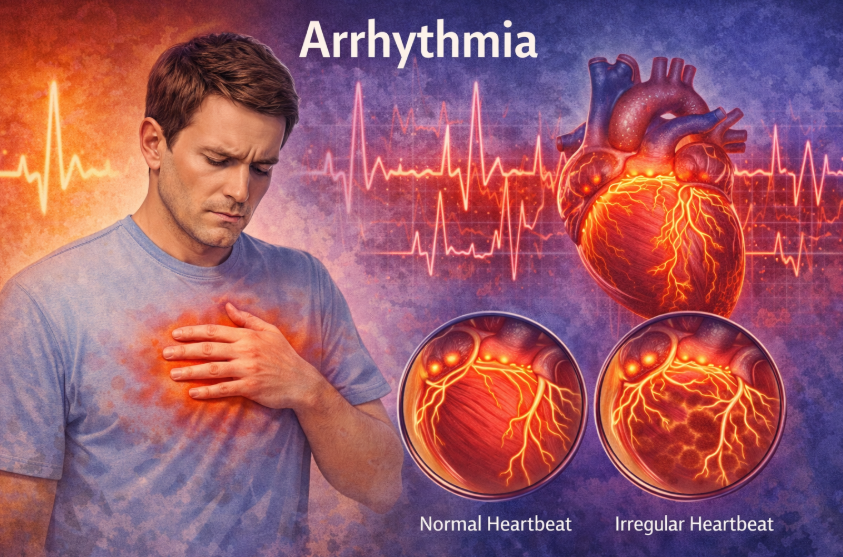
Arrhythmia is a condition in which the heart beats too fast, too slow, or irregularly due to abnormal electrical signals that control the heartbeat.
A normal resting heart rate for adults is typically 60–100 beats per minute. Arrhythmias occur when this electrical system is disrupted.
Not all arrhythmias are dangerous, but some require medical evaluation and monitoring.
How the Heart’s Rhythm Works
The heart beats in a coordinated pattern controlled by electrical impulses that start in the sinoatrial (SA) node and travel through the heart muscle.
When this electrical pathway is disturbed, the heart may:
- Beat irregularly
- Skip beats
- Beat too quickly or too slowly
These changes affect how efficiently blood is pumped to the body.
Common Types of Arrhythmia
Arrhythmias are classified based on heart rate and rhythm pattern.
Fast Heart Rhythms (Tachycardia)
- Atrial fibrillation
- Supraventricular tachycardia (SVT)
- Ventricular tachycardia
Slow Heart Rhythms (Bradycardia)
- Sinus node dysfunction
- Heart block
Irregular Rhythms
- Premature atrial or ventricular contractions
According to global cardiology data, atrial fibrillation is the most common arrhythmia, affecting millions worldwide and increasing stroke risk if untreated.
Symptoms of Arrhythmia
Symptoms can vary widely. Some people have no symptoms at all.
Common symptoms include:
- Palpitations or fluttering sensation
- Rapid or slow heartbeat
- Dizziness or lightheadedness
- Shortness of breath
- Fatigue
- Chest discomfort
- Fainting (in severe cases)
Any persistent or worsening symptoms should be evaluated by a heart doctor in Nepal.
What Causes Arrhythmia?
Arrhythmia can develop due to multiple factors, including:
- Heart disease or prior heart attack
- High blood pressure
- Electrolyte imbalances
- Thyroid disorders
- Excess caffeine or alcohol
- Certain medications
- Stress and lack of sleep
In some cases, arrhythmia occurs in individuals with otherwise healthy hearts.
How Arrhythmia Is Diagnosed
Diagnosis focuses on identifying rhythm abnormalities and underlying causes.
Common Diagnostic Tests
- Electrocardiogram (ECG)
- Holter monitoring (24–48 hours)
- Event recorder for intermittent symptoms
- Blood tests
- Echocardiography
Early and accurate diagnosis helps guide appropriate management.
Role of a Cardiologist in Arrhythmia Care

Evaluation and management of arrhythmia are typically guided by a cardiologist.
Clinical experience shared by Dr. Satish Kumar Singh, a trusted cardiologist in Nepal with over 15 years of experience, highlights that many arrhythmias are manageable when detected early and monitored correctly.
A Cardiologist in Kathmandu or other parts of Nepal assesses:
- Symptom pattern
- Risk of complications such as stroke
- Need for medication, monitoring, or further intervention
Is Arrhythmia Dangerous?
The impact of arrhythmia depends on:
- Type of arrhythmia
- Frequency and duration
- Presence of heart disease
Some arrhythmias are harmless, while others can increase the risk of:
- Stroke
- Heart failure
- Sudden cardiac events
This is why consultation with a qualified cardiologist in Nepal is important for persistent symptoms.
Living With Arrhythmia
Many people live full, active lives with arrhythmia by:
- Following medical advice
- Managing risk factors
- Attending regular follow-ups
Lifestyle measures may include:
- Reducing caffeine and alcohol
- Managing stress
- Monitoring blood pressure
- Maintaining regular sleep
Medical Review & Professional Note
This article is written for educational and awareness purposes. Diagnosis and treatment decisions should always be made in consultation with a qualified cardiologist or heart specialist.
Frequently Asked Questions (FAQ)
What is the most common arrhythmia?
Atrial fibrillation is the most common arrhythmia worldwide.
Can arrhythmia go away on its own?
Some mild arrhythmias may resolve, but persistent symptoms require medical evaluation.
Is arrhythmia common in young people?
Certain arrhythmias can occur at any age, though risk increases with age.
When should I see a heart doctor?
If you experience repeated palpitations, dizziness, fainting, or shortness of breath, seek evaluation.
Is arrhythmia treatable?
Many arrhythmias are manageable with monitoring, medication, or other medical approaches.
Final Thoughts
Understanding What Is Arrhythmia? empowers individuals to recognize abnormal heart rhythms early and seek timely care. Awareness, accurate diagnosis, and cardiology-guided follow-up are key to protecting long-term heart health.