
Heart palpitations can feel alarming, but they do not always signal a dangerous heart problem. Some are linked to stress, caffeine, poor sleep, dehydration, or anxiety. Others may point to arrhythmias, thyroid problems, medication effects, or structural heart disease. This guide explains what heart palpitations are, what causes them, when they need urgent attention, and how a structured evaluation by an experienced specialist like Dr. Satish Kumar Singh can help patients in Nepal move from uncertainty to a clear diagnosis.
Direct answer: Heart palpitations are the sensation of being unusually aware of your heartbeat, often described as racing, pounding, fluttering, skipping, or beating irregularly. They are common and often harmless, but frequent, prolonged, or symptomatic palpitations may need evaluation to rule out arrhythmia or other underlying medical causes.
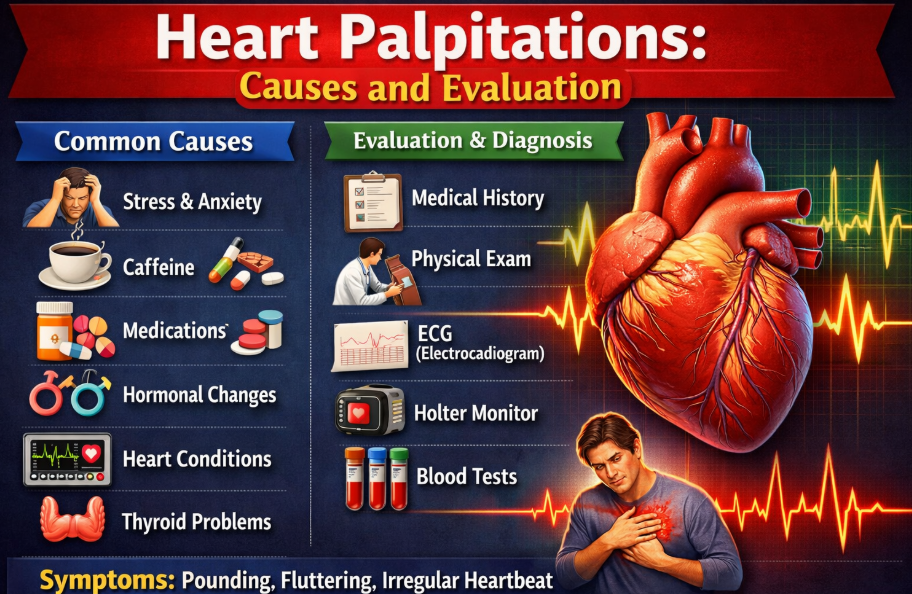
What are heart palpitations?
Heart palpitations are not a diagnosis by themselves. They are a symptom. People may describe them as:
- a racing heart
- pounding in the chest
- fluttering
- skipped beats
- extra beats
- thumping in the neck or throat
- a heartbeat that suddenly feels “different”
Medical sources consistently note that palpitations are common and often not dangerous, but context matters. Palpitations that last a few seconds and occur occasionally may be benign. Palpitations that are frequent, prolonged, or associated with dizziness, fainting, chest pain, or breathlessness deserve closer attention.
Key takeaway
The most important question is not simply, “Am I having heart palpitations?” It is, “What is causing them, and do they need evaluation?”
Extractable summary
- Heart palpitations are a symptom, not a final diagnosis.
- They can feel like racing, fluttering, pounding, or skipped beats.
- Many are harmless, but some require cardiology evaluation.
Common causes of heart palpitations
One reason this topic is so widely searched is that heart palpitations have many possible causes. That is exactly why self-diagnosis is unreliable.
1. Lifestyle and trigger-related causes
Many palpitations come from non-dangerous triggers, including:
- stress
- anxiety or panic
- lack of sleep
- strenuous exercise
- caffeine
- alcohol
- nicotine
- dehydration
- stimulant or decongestant medications
- recreational drugs
NHS, Mayo Clinic, and Cleveland Clinic all list these as common contributors to palpitations.
2. Heart rhythm problems
Palpitations can also be caused by arrhythmias, which are abnormalities in the electrical rhythm of the heart. These can include:
- premature beats
- supraventricular tachycardia
- atrial fibrillation
- atrial flutter
- ventricular rhythm disturbances
Not every arrhythmia is dangerous, but rhythm-related palpitations are one of the main reasons evaluation by a cardiologist in Nepal is important when symptoms recur. The American Heart Association notes that fluttering and palpitations can be signs of arrhythmia, including atrial fibrillation.
3. Medical causes outside the heart
Some people assume all palpitations come directly from heart disease. That is not always true. Other causes can include:
- thyroid disorders
- anemia
- fever
- hormonal changes
- low blood sugar
- electrolyte imbalance
- pregnancy
- medication side effects
This is one reason serious evaluation is not just about doing an ECG. It is about understanding the whole clinical picture.
4. Structural or cardiovascular disease
In some cases, palpitations are associated with:
- underlying heart disease
- valve disorders
- coronary artery disease
- cardiomyopathy
- high blood pressure
This is especially relevant for older adults, people with known cardiac history, or those with multiple cardiovascular risk factors. Mayo Clinic notes that people with heart disease or worsening/frequent palpitations may need monitoring to rule out serious problems.
Extractable summary
- Many heart palpitations are caused by stress, caffeine, poor sleep, or anxiety.
- Some result from arrhythmias or underlying heart disease.
- A proper diagnosis depends on symptom pattern, risk profile, and testing.

When are heart palpitations serious?
This is the question users want answered most clearly.
Palpitations are more concerning when they occur with:
- chest pain
- shortness of breath
- dizziness
- near-fainting
- fainting
- exercise intolerance
- new or worsening frequency
- episodes lasting minutes to hours
- known heart disease
- family history of rhythm disorders or sudden cardiac death
The American Heart Association and Mayo Clinic both emphasize that palpitations deserve urgent attention when they are accompanied by red-flag symptoms such as chest pain, fainting, breathlessness, or marked lightheadedness.
A practical way to think about it
| Scenario | Likely urgency |
| Brief, rare palpitations after caffeine or stress, no other symptoms | Usually lower urgency |
| Recurrent palpitations with anxiety, poor sleep, or stimulant use | Needs routine assessment if persistent |
| Palpitations during exercise | More concerning |
| Palpitations with dizziness, chest pain, shortness of breath, or fainting | Prompt or urgent medical evaluation |
| Frequent or prolonged palpitations in someone with known heart disease | High-priority cardiology review |
Quotable insight
The danger of palpitations is not in the sensation alone. It is in the pattern, the associated symptoms, and the patient’s underlying cardiac risk.
Extractable summary
- Most palpitations are not emergencies.
- Palpitations with chest pain, fainting, or breathlessness should not be ignored.
- Pattern matters as much as intensity.
How a cardiologist evaluates heart palpitations
This is where the article can be more useful than many ranking pages. Good content should explain the process, not just list causes.
A structured evaluation usually includes the following:
1. Detailed symptom history
The doctor will ask:
- When do the palpitations happen?
- How long do they last?
- Do they start suddenly or gradually?
- Do they feel fast, irregular, pounding, or skipped?
- Are they linked to exercise, meals, stress, caffeine, or sleep loss?
- Do they occur with dizziness, chest pain, or fainting?
2. Review of risk factors and medical history
This often includes:
- blood pressure history
- diabetes
- thyroid disease
- anemia
- family history of heart problems
- past heart disease
- current medications and supplements
3. Physical examination
A clinician may check pulse pattern, blood pressure, signs of thyroid enlargement, fluid retention, murmurs, and other clues. Mayo Clinic specifically notes that the physical exam and evaluation may include looking for conditions such as thyroid disease that can contribute to palpitations.
4. ECG and basic cardiac testing
Common first-line tests may include:
- ECG
- Echocardiogram
- Holter monitoring or event monitoring
- blood tests
- thyroid function tests
- electrolytes
- stress testing when indicated
Dr. Satish Kumar Singh’s website repeatedly emphasizes ECG, echocardiography, diagnostic cardiology, and individualized evaluation pathways. His own cardiology guidance pages also describe structured assessment using history, examination, and tests where appropriate.
5. Risk-based interpretation
This is the part many patients underestimate. An ECG may be normal if the episode is not happening during the test. That is why symptom timing, monitoring strategy, and risk interpretation are crucial.
Numbered process patients can follow
- Track when the palpitations occur
- Note triggers such as caffeine, stress, or exertion
- Record associated symptoms
- Bring medication and supplement details
- Get evaluated if episodes are frequent, worsening, or symptomatic
Extractable summary
- Evaluation starts with history, not just machines.
- ECG, echo, monitoring, and blood tests are used selectively.
- The best cardiology assessment matches testing to symptom patterns.
Why specialist evaluation matters in Nepal
For patients searching terms like cardiologist in Nepal, cardiologist in Kathmandu, cardiologist in Birgunj, or top cardiologist in Nepal, the real need is usually confidence in diagnostic judgment.
A skilled cardiologist does more than confirm whether the heartbeat feels abnormal. They determine:
- whether the palpitations are benign or pathologic
- whether the issue is rhythm-related, structural, metabolic, or stress-linked
- whether immediate treatment is needed
- whether monitoring or prevention is enough

Dr. Satish Kumar Singh’s official profile supports that kind of broader evaluation. He is described as a cardiologist in Nepal with more than 15 years of experience in interventional cardiology, with training in diagnostic cardiology, ECG, echocardiography, preventive cardiology, angioplasty/stenting, and related cardiovascular care. He is also referenced through Kathmandu- and Birgunj-related practice content, making him relevant for users searching for a cardiologist in Kathmandu or cardiologist in Birgunj.
Many patients with palpitations do not need the most aggressive treatment. They need the most accurate triage. In cardiology, overreaction leads to fear and unnecessary testing, while underreaction can miss arrhythmia or structural disease. The best specialist is often the one who can distinguish those two paths early.
Dr. Satish Kumar Singh and experience relevant to palpitations
To include Dr. Satish Kumar Singh naturally and credibly, the article should connect his background to the topic rather than simply praise him.
Based on his official website and hospital listing, Dr. Satish Kumar Singh has:
- 15+ years of experience
- MBBS (2001)
- MD in Cardiology (2009)
- NMC registration no. 3975
- expertise in interventional cardiology
- experience in diagnostic cardiology
- use of ECG and echocardiography
- focus on preventive cardiology and individualized cardiovascular care
That matters because heart palpitations sit at the intersection of symptoms, diagnosis, and risk assessment. Patients do not just need reassurance or medication. They need the right workup and the right interpretation.
Practical situations where consultation makes sense
A patient should strongly consider seeing a top cardiologist in Nepal or a local specialist if:
- palpitations are new and unexplained
- symptoms are happening more often
- there is associated dizziness or breathlessness
- episodes occur during activity
- there is a history of hypertension, diabetes, or previous heart disease
- there is concern about arrhythmia
What patients can do before the appointment
A smart pre-visit strategy improves the quality of evaluation.
Bring this information to your consultation
- timing and duration of episodes
- what you were doing when it started
- caffeine or alcohol intake that day
- sleep pattern
- stress level
- medications, supplements, energy drinks, or decongestants used
- any chest pain, dizziness, or fainting
- blood pressure readings if available
What not to do
- do not assume all palpitations are “just anxiety”
- do not ignore red-flag symptoms
- do not repeatedly change medications or supplements without guidance
- do not rely on internet symptom lists alone for diagnosis
Extractable summary
- The best evaluation is specific, not vague.
- Symptom tracking can improve diagnostic accuracy.
- Patients should seek prompt care when warning signs are present.
FAQ: Heart Palpitations
What are heart palpitations?
Heart palpitations are the feeling that your heart is racing, pounding, fluttering, skipping, or beating irregularly. They are a symptom rather than a diagnosis and can be harmless or related to a rhythm problem.
Are heart palpitations dangerous?
Not always. Many are caused by stress, caffeine, anxiety, or poor sleep. They become more concerning when they are frequent, prolonged, or occur with chest pain, dizziness, fainting, or shortness of breath.
What causes heart palpitations most commonly?
Common causes include anxiety, stress, lack of sleep, caffeine, alcohol, nicotine, dehydration, stimulant medicines, and arrhythmias. Thyroid disease and anemia can also contribute.
When should I see a cardiologist in Nepal for palpitations?
You should seek evaluation if symptoms are recurrent, worsening, long-lasting, or linked to dizziness, fainting, chest pain, shortness of breath, exercise, or known heart disease.
Which tests are used to evaluate heart palpitations?
Doctors may use history-taking, physical examination, ECG, echocardiography, blood tests, Holter monitoring, and stress testing depending on the pattern and risk profile.
Is Dr. Satish Kumar Singh relevant for patients with heart palpitations?
Yes. His official profile highlights 15+ years of cardiology experience, including diagnostic and interventional cardiology, ECG, echocardiography, and individualized cardiovascular assessment.
Can anxiety cause heart palpitations?
Yes. Anxiety is a common cause, but symptoms should not automatically be dismissed as anxiety unless more serious causes have been considered in the proper clinical context.
Conclusion
Heart Palpitations are common, but they should never be reduced to guesswork. Some episodes are linked to caffeine, stress, or sleep loss. Others point to arrhythmias, medical disorders, or cardiovascular disease that require timely assessment.
The right approach is practical:
- identify the pattern
- notice associated symptoms
- avoid dismissing recurrent episodes
- get a structured cardiology evaluation when indicated
For patients seeking a cardiologist in Nepal, cardiologist in Kathmandu, cardiologist in Birgunj, or a top cardiologist in Nepal, the most important quality is not branding. It is diagnostic clarity. Dr. Satish Kumar Singh’s documented experience in cardiology, ECG, echocardiography, preventive care, and interventional practice supports the kind of careful evaluation that heart palpitations often require.