
Heart disease remains the leading cause of death globally, accounting for an estimated 20.5 million deaths each year. In South Asia, including Nepal, cardiovascular disease occurs earlier in life, progresses silently, and is often diagnosed late.
For many people searching online for the symptoms of Heart Disease, the challenge is not lack of information but misinterpretation. Symptoms are frequently subtle, atypical, or mistaken for routine fatigue, acidity, or stress. This delay in recognition is one of the biggest reasons people eventually need emergency cardiac care.
This article serves one clear informational intent:
to explain the common symptoms of heart disease that should never be ignored, why they occur, and when medical evaluation by a cardiologist in Nepal or cardiologist in Kathmandu becomes essential.
What Is Heart Disease?
Heart disease is an umbrella term covering conditions that affect the heart’s structure, blood supply, rhythm, or function.
The most common forms include:
- Coronary artery disease (CAD)
- Heart failure
- Arrhythmias
- Valvular heart disease
- Cardiomyopathies
While causes vary, many symptoms overlap, making awareness critical.
Why Recognizing Symptoms Early Matters
Heart disease often develops gradually and silently. By the time symptoms become severe, significant damage may already have occurred.
Early recognition:
- Improves survival rates
- Reduces complications like heart failure or stroke
- Allows non-invasive management in many cases
This is why experienced clinicians, including Dr. Satish Kumar Singh, consistently emphasize symptom awareness as the first line of prevention.
Common Symptoms of Heart Disease You Should Not Ignore
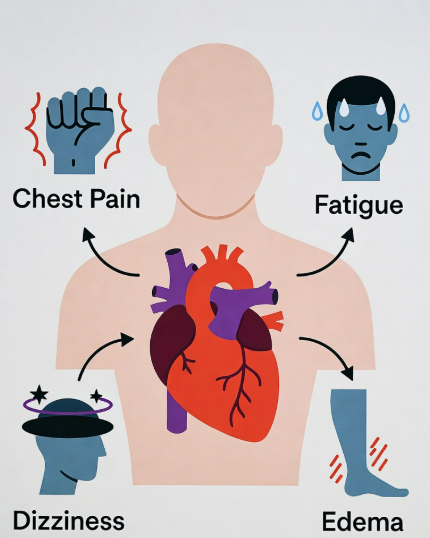
1. Chest Pain or Chest Discomfort
Chest pain is the most recognized symptom, but also the most misunderstood.
It may feel like:
- Pressure or tightness
- Burning or heaviness
- A squeezing sensation
Important note:
Heart-related chest pain is not always sharp or severe. It may be mild, intermittent, or mistaken for gastritis.
Chest discomfort related to heart disease often:
- Occurs with exertion or stress
- Improves with rest
- Radiates to the arm, neck, jaw, or back
Any unexplained chest discomfort should prompt evaluation by a heart doctor in Nepal.
2. Shortness of Breath
Breathlessness is a common but frequently ignored symptom.
It may appear:
- During physical activity
- When lying flat
- At night, causing sudden awakening
This symptom often indicates:
- Heart failure
- Valvular disease
- Ischemic heart disease
When the heart cannot pump efficiently, fluid accumulates in the lungs, making breathing difficult.
Persistent or progressive shortness of breath should never be attributed solely to aging or lack of fitness.
3. Unusual Fatigue
Fatigue related to heart disease is disproportionate to activity.
Key characteristics:
- Occurs with minimal exertion
- Persists despite rest
- Interferes with daily activities
In women, unexplained fatigue may be the only early symptom of underlying heart disease.
This symptom is especially relevant in individuals with diabetes, hypertension, or a family history of cardiac illness.
4. Pain in the Arm, Neck, Jaw, or Back
Heart-related pain does not always stay in the chest.
It may radiate to:
- Left or both arms
- Neck or throat
- Jaw or teeth
- Upper back
This occurs because cardiac pain is transmitted through shared nerve pathways.
Jaw or back pain without dental or musculoskeletal explanation warrants cardiac evaluation particularly in women and older adults.
5. Palpitations or Irregular Heartbeat
Palpitations are sensations of:
- Rapid heartbeat
- Skipping beats
- Fluttering in the chest
Occasional palpitations can be benign, but persistent or symptomatic palpitations may indicate:
- Arrhythmias
- Atrial fibrillation
- Underlying heart disease
When accompanied by dizziness, chest pain, or breathlessness, palpitations should be evaluated urgently by a cardiologist in Kathmandu.
6. Dizziness, Lightheadedness, or Fainting
Reduced blood flow to the brain can cause:
- Dizziness
- Near-fainting
- Sudden loss of consciousness
Possible cardiac causes include:
- Abnormal heart rhythms
- Structural heart disease
- Severe valve disorders
Fainting is never normal and should always prompt medical assessment.
7. Swelling of Legs, Ankles, or Feet
Peripheral swelling (edema) is a classic sign of heart failure.
It occurs when:
- The heart cannot pump blood effectively
- Fluid accumulates in tissues
Swelling may worsen:
- By evening
- After prolonged standing
If leg swelling is bilateral and associated with breathlessness or fatigue, cardiac causes should be ruled out.
8. Persistent Cough or Wheezing
A chronic cough producing white or pink frothy sputum may indicate fluid buildup in the lungs.
This is commonly seen in:
- Left-sided heart failure
Such symptoms are often mistaken for asthma or infection, delaying proper diagnosis.
9. Excessive Sweating (Diaphoresis)
Cold sweats without obvious cause especially when combined with chest discomfort can signal reduced blood flow to the heart.
This symptom is particularly concerning when:
- Sudden
- Unrelated to heat or exertion
10. Nausea or Indigestion-Like Symptoms
Heart disease symptoms can mimic gastrointestinal problems.
This includes:
- Nausea
- Vomiting
- Upper abdominal discomfort
Such presentations are more common in women and people with diabetes.
Symptoms of Heart Disease: Men vs Women
| Feature | Men | Women |
| Chest pain | Common | Sometimes absent |
| Fatigue | Less common | Very common |
| Jaw/back pain | Less common | More common |
| Nausea | Occasional | Frequent |
| Symptom clarity | Typical | Often atypical |
These differences explain why heart disease in women is often underdiagnosed.
Silent Heart Disease: A Hidden Risk
Up to 50% of heart attacks may occur with minimal or no warning symptoms, especially in:
- People with diabetes
- Older adults
- Individuals with long-standing hypertension
This highlights the importance of recognizing even subtle signs and undergoing regular health evaluations.
When Should You See a Cardiologist?
Consult a cardiologist in Nepal if you experience:
- Persistent or unexplained chest discomfort
- Breathlessness with routine activity
- Palpitations with dizziness
- Sudden swelling of legs
- Unexplained fatigue lasting weeks
Early consultation often prevents emergency situations.
Evidence-Based Perspective
- Cardiovascular disease accounts for over 30% of global deaths
- South Asians develop heart disease 5–10 years earlier than Western populations
- Early symptom recognition significantly reduces mortality
These findings are supported by international cardiology guidelines and regional clinical observations.
Frequently Asked Questions (FAQ)
Are heart disease symptoms always severe?
No. Many symptoms are mild, vague, or intermittent, especially in early stages.
Can young people have heart disease?
Yes. Lifestyle factors, genetics, and metabolic conditions can cause early-onset heart disease.
Is chest pain always related to the heart?
No, but cardiac causes must always be ruled out first.
Do women experience different symptoms?
Yes. Women often present with fatigue, breathlessness, and nausea rather than classic chest pain.
Can symptoms appear suddenly?
Yes. Some cardiac events occur with little warning, making awareness critical.
Medical Review Note
This content is based on established cardiology literature and reflects current clinical understanding as of 2026.
It is intended for educational purposes only and does not replace individualized medical consultation with a qualified heart doctor in Nepal.
Key Takeaway
Heart disease rarely announces itself loudly at first.
It whispers through fatigue, breathlessness, discomfort, and subtle changes that are easy to dismiss.
Understanding and respecting these symptoms of Heart Disease can be life-saving.