
A Complete Patient Guide by a Trusted Cardiologist in Nepal
Heart disease remains one of the leading causes of illness and death worldwide, and Nepal is no exception. With changing lifestyles, increasing stress, sedentary habits, smoking, diabetes, and high blood pressure, more people are seeking timely and accurate cardiac evaluation. One of the most common questions patients ask a heart doctor in Nepal is: “What heart tests do I need, and what do they actually mean?”
This in-depth guide on common heart tests and what they mean is written to help patients, families, and caregivers understand cardiac investigations in simple language.
This content is authored with medical insight from Dr. Satish Kumar Singh, a trusted and experienced cardiologist with more than 15 years of dedicated service in cardiovascular and interventional cardiology, widely regarded by patients as one of the best cardiologists in Nepal.
Why Heart Tests Are So Important
The heart is a complex organ, and many heart problems do not show obvious symptoms in early stages. Chest pain, shortness of breath, palpitations, dizziness, or fatigue may appear only after significant disease has already developed.
Heart tests help to:
- Detect heart disease early
- Identify blocked arteries
- Assess heart muscle strength
- Monitor rhythm abnormalities
- Guide proper heart treatment in Nepal
According to the World Health Organization (WHO):
- Cardiovascular diseases cause over 17.9 million deaths each year globally
- More than 75% of these deaths occur in low- and middle-income countries, including Nepal
Early testing and timely diagnosis by a qualified heart doctor in Nepal can significantly reduce complications and save lives.
Who Should Undergo Heart Tests?
You may need heart tests if you:
- Have chest pain or discomfort
- Experience breathlessness or palpitations
- Have high blood pressure, diabetes, or high cholesterol
- Smoke or have a family history of heart disease
- Are above 40 years of age with risk factors
- Have had previous heart treatment in Nepal
Overview: Common Heart Tests at a Glance
| Test Name | Purpose | Invasiveness |
| ECG | Heart rhythm & electrical activity | Non-invasive |
| Echocardiography | Heart structure & pumping | Non-invasive |
| Treadmill Test (TMT) | Stress-related heart problems | Non-invasive |
| Holter Monitoring | 24–48 hr rhythm analysis | Non-invasive |
| Blood Tests | Heart damage & risk factors | Minimally invasive |
| CT Coronary Angiography | Coronary artery imaging | Minimally invasive |
| Coronary Angiography | Detect artery blockages | Invasive |
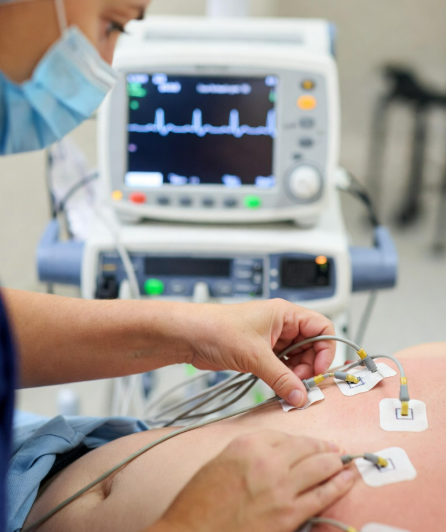
1. Electrocardiogram (ECG): The First Step in Heart Testing
An Electrocardiogram (ECG) is often the very first test ordered by a heart doctor in Nepal.
What Does an ECG Show?
- Heart rate and rhythm
- Electrical conduction abnormalities
- Evidence of previous or ongoing heart attack
- Effects of high blood pressure
Why ECG Matters
ECG is quick, painless, and provides immediate information. It is commonly used during:
- Routine heart checkups
- Emergency chest pain evaluation
- Pre-surgical assessments
While ECG alone cannot detect all heart diseases, it is a crucial starting point for accurate heart treatment in Nepal.
2. Echocardiography (Echo): Understanding Heart Structure and Function
An echocardiogram uses ultrasound waves to create real-time images of the heart.
What an Echo Reveals
- Size and thickness of heart chambers
- Heart valve function
- Pumping efficiency (ejection fraction)
- Congenital heart defects
- Fluid around the heart
Why It’s Important
Echo is essential in diagnosing:
- Heart failure
- Valve diseases
- Cardiomyopathy
Dr. Satish Kumar Singh, with over 15 years of experience in cardiology, frequently uses echocardiography to guide individualized heart treatment in Nepal, especially in patients with complex conditions.

3. Treadmill Test (TMT): Evaluating the Heart Under Stress
A Treadmill Test (TMT) checks how the heart performs during physical exertion.
What Happens During TMT?
- Patient walks or runs on a treadmill
- Heart rate, ECG, and blood pressure are monitored
- Exercise intensity gradually increases
What TMT Detects
- Reduced blood flow to the heart
- Exercise-induced chest pain
- Abnormal heart rhythms
TMT is particularly helpful in patients with suspected coronary artery disease and is commonly recommended by the best cardiologist in Nepal for early detection.
4. Holter Monitoring: 24-48 Hour Heart Rhythm Tracking
Some heart rhythm problems do not occur during a short ECG. Holter monitoring records heart activity continuously for 24–48 hours.
Holter Test Helps Diagnose:
- Intermittent palpitations
- Unexplained fainting
- Silent arrhythmias
This test provides real-life heart rhythm data and plays a major role in modern heart treatment in Nepal.
5. Blood Tests for Heart Health
Blood tests are a critical part of heart evaluation.
Common Cardiac Blood Tests
| Test | What It Indicates |
| Troponin | Heart muscle damage |
| Lipid Profile | Cholesterol levels |
| Blood Sugar | Diabetes risk |
| BNP | Heart failure severity |
| CRP | Inflammation & risk |
Blood tests help cardiologists plan both preventive and interventional strategies.
6. CT Coronary Angiography: Advanced Non-Invasive Imaging
CT coronary angiography provides detailed images of coronary arteries without traditional catheterization.
What It Detects
- Plaque buildup
- Early artery narrowing
- Congenital coronary anomalies
This test is increasingly used in Nepal for early diagnosis, especially in patients with moderate risk.
7. Coronary Angiography: Gold Standard for Blockage Detection
Coronary angiography is an invasive but highly accurate test performed in a catheterization laboratory.
Why It’s Done
- Identify exact location and severity of artery blockages
- Decide need for stent or bypass surgery
As an experienced interventional cardiologist, Dr. Satish Kumar Singh has performed and supervised numerous angiographies, contributing significantly to advanced heart treatment in Nepal.
Interventional Cardiology: Beyond Diagnosis
Interventional cardiology focuses on minimally invasive procedures such as:
- Coronary angioplasty
- Stent placement
With over 15 years of hands-on experience, Dr. Singh combines evidence-based practice with patient-centered care, earning recognition as a trusted heart doctor in Nepal.

Why Experience Matters in Cardiology
Heart care requires:
- Precise interpretation of tests
- Timely decision-making
- Technical expertise
An experienced cardiologist understands subtle changes in test results and tailors treatment accordingly. This is why patients often seek the best cardiologist in Nepal for both diagnosis and long-term management.
Heart Treatment in Nepal: A Growing Landscape
Nepal has made significant progress in:
- Cardiac diagnostics
- Interventional cardiology
- Preventive heart care
With skilled specialists like Dr. Satish Kumar Singh, patients now have access to advanced heart treatment in Nepal that meets international standards.
Frequently Asked Questions (FAQs)
What is the most basic heart test?
ECG is usually the first and most basic heart test.
Are heart tests painful?
Most heart tests are non-invasive and painless.
How often should heart tests be done?
It depends on age, symptoms, and risk factors. Your heart doctor in Nepal will guide you.
Can heart disease exist with normal tests?
Yes. Some conditions need advanced testing or follow-up.
Who is the best cardiologist in Nepal for heart tests?
Patients often prefer experienced specialists with strong clinical and interventional expertise, such as Dr. Satish Kumar Singh.
Author Note

Written with medical expertise by:
Dr. Satish Kumar Singh
Experienced Cardiologist & Interventional Cardiologist
15+ Years of Dedicated Service in Cardiovascular Care
Dr. Singh’s extensive experience in diagnostic and interventional cardiology, combined with a patient-first approach, has earned him trust as one of the best cardiologists in Nepal.
Final Thoughts
Understanding common heart tests and what they mean empowers patients to take control of their heart health. Accurate diagnosis, timely testing, and expert interpretation are the foundation of effective heart care.
If you or your loved ones require cardiac evaluation or advanced heart treatment in Nepal, consulting an experienced heart doctor in Nepal ensures clarity, confidence, and continuity of care.